Blog
Japan’s IT Sector in 2026
As Japan steps into 2026, its IT sector is quietly transforming. Companies face growing pressure to innovate, yet a persistent shortage of skilled professionals is slowing the adoption of key technologies like public cloud and AI. Without the right talent and strategies, organizations risk falling behind in an increasingly digital and interconnected global economy.

Written by
Ariadne Mavrogenis
Last updated
JAN 20, 2026
Topics
#business
Length
4 min read

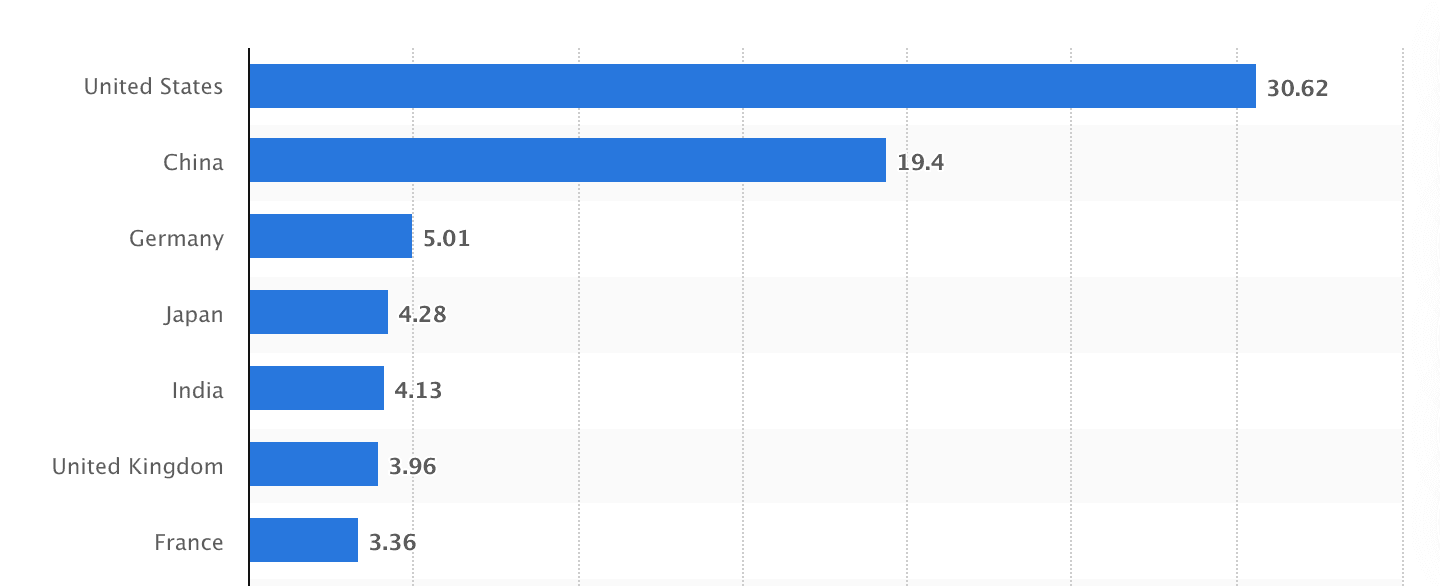
This challenge is further shaped by Japan’s broader economic position. After slipping from third to fourth place in the global economy in early 2024, the country still remains a major power alongside the United States, China, and India. Its nominal GDP of around $4.2 trillion continues to grow steadily, and projections suggest it could reach $5.0 trillion by 2030 - if Japan can fully engage with the global market and adapt to the demands of a rapidly evolving digital economy.
Countries with the largest gross domestic product (GDP) in 2025 (in trillion U.S. dollars): 
While the nation possesses the technical expertise, infrastructure, and resources to reclaim its third-place ranking, doing so will require decisive action: embracing international talent, modernizing workforce models, and accelerating digital transformation. By rising to meet these challenges, Japan’s IT sector has a real opportunity not just to keep pace, but to strengthen its position as a global technology leader.
Language as a Persistent Challenge
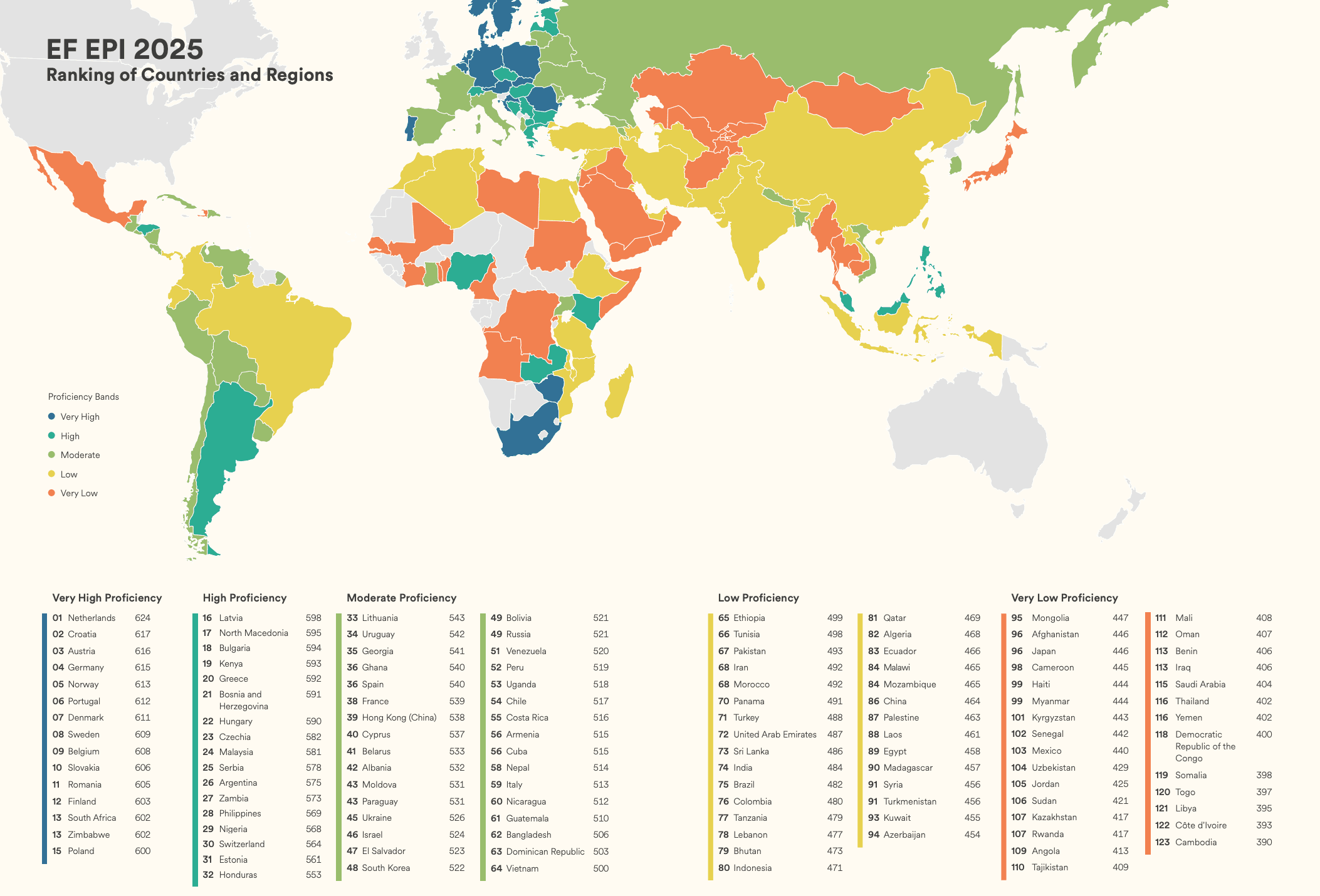
For Japan’s IT sector, language remains a critical barrier. In the 2025 EF English Proficiency Index, Japan ranked 96th out of 123 non-native English-speaking countries, marking its 11th consecutive year of decline. The country now lags behind regional peers such as Singapore and South Korea, highlighting a widening gap in the skills needed for global collaboration.

Limited English proficiency has real consequences for innovation. As the global language of software development, research, and international partnerships, English is essential to cross-border collaboration and knowledge exchange. Without it, the flow of ideas slows, adoption of new technologies lags, and Japan risks weakening its competitiveness in the global digital economy.
Japan IT Labour Market
The language challenge intersects with an even broader problem: a severe shortage of skilled IT professionals. By 2026, Japan could be short of around 380,000 IT specialists in key areas like software development, AI, cloud computing, data science, and cybersecurity. With demand so high, finding bilingual professionals fluent in both Japanese and English has become increasingly difficult. High turnover, often within the first six months, adds further pressure.
To navigate these challenges, organizations must rethink traditional hiring approaches. Many are exploring targeted training and upskilling programs, long-term talent development, and flexible workforce models such as team augmentation or project-based collaboration. Integrating skilled foreign professionals can help fill critical gaps, while government initiatives to attract international talent offer additional support. By taking proactive steps to build and retain a capable workforce, companies can accelerate digital transformation and maintain competitiveness.
Why Working with Foreign Professionals Matters
In 2026, collaboration with foreign professionals is less an option and more a necessity. The demand for software developers, AI specialists, and cloud engineers exceeds the domestic supply, and relying solely on local talent can slow progress. Bringing in foreign professionals keeps projects moving, reduces pressure on internal teams, and strengthens competitiveness in a fast-paced technology market.
Beyond addressing talent shortages, international collaboration brings fresh perspectives. Foreign engineers often have experience with agile workflows, cloud-native systems, and open-source collaboration. Combined with Japan’s strengths in quality, reliability, and long-term thinking, these approaches enable more flexible and modern development practices without sacrificing stability.
Multinational teams also support Japan’s global ambitions. They are better equipped to build software that meets international standards and user expectations, helping Japanese products and services scale beyond the domestic market. Language and cultural differences, while sometimes seen as obstacles, are increasingly managed through English-based communication, bilingual coordination, and shared tools. In practice, these mixed teams often strengthen collaboration rather than hinder it.
Looking Ahead
Japan’s IT sector in 2026 faces significant challenges - from talent shortages to language barriers - but these obstacles also point to opportunity. Companies that combine Japan’s technical expertise with international collaboration, flexible workforce strategies, and proactive efforts to address language gaps can accelerate digital transformation and modernize development practices. By building diverse, skilled, and adaptable teams, organizations can stay competitive domestically while scaling globally. The future of Japan’s IT industry will belong to those who act decisively today.
Scriptide is a highly skilled software development company that specializes in custom, complex B2B software solutions. We offer a wide range of services, including digital transformation, web and mobile development, AI, blockchain, and more.
Get a free IT consultation. We are excited to hear from you.
You might also like these articles!
Click for details
Cultural Foundations of UX: Understanding Japanese User Behavior
Effective UX design starts with understanding the people you’re designing for. Culture shapes how users interpret information, navigate interfaces, and make decisions. That’s why a design that works well for a Western audience won’t necessarily work for an Eastern one. Culture significantly influences how we perceive the world and how we interact with technology. When we understand the cultural variables that shape our users’ perceptions, we can more accurately identify what needs improvement and design experiences that feel intuitive to them. After reading this article, you will gain insight into how deeply culture impacts UX design, and why a one-size-fits-all approach rarely works across different regions.
#business
•
DEC 08, 2025
•
5 min read
Click for details
From Market to Partner: Insights from Scriptide’s Founders on Japan
Scriptide has been active in the Japanese market for five years. Following their latest business trip to Japan, we spoke with CEO Daniel Fazekas and COO Tamas Fazekas, the company’s founders, about their experiences, impressions of Japanese business culture, and why they see Japan as such an important market. During their stay, they attended the Japan–Hungary Business Forum, visited the Novare Innovation Center, and explored the site of the upcoming World Expo in Osaka.
#business
•
OCT 03, 2025
•
8 min read